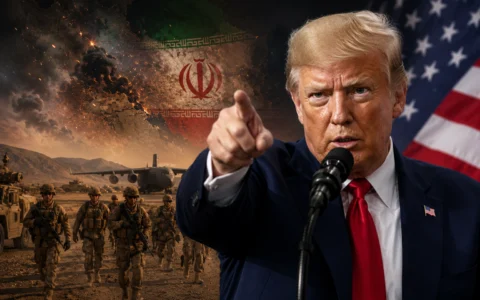
President Donald Trump issued his starkest warning yet to Iran on Monday, July 20, 2026, vowing that Tehran will pay “many times over” for every American soldier killed, as the United States launched its ninth consecutive night of airstrikes on Iran and the conflict showed no sign of de-escalating.
Key Takeaways
- Trump warned Iran on Truth Social: “Every time Iran kills an American Soldier they will pay for that killing many times over!”
- 17 US service members have been killed since the war began on February 28, 2026
- Three new US deaths were announced over the weekend, two in Jordan, one in Iraq
- The US launched its 9th consecutive night of airstrikes on Iran overnight Sunday into Monday
- The US is increasing the number of fighter jets deployed to the Middle East
- Iran struck the Darkhovin nuclear power plant site, IAEA is investigating
- Kuwait and Bahrain were targeted again Monday; sirens sounded five times in Bahrain
- US gas prices hit $4 per gallon, 34% higher than before the war began
- Iran-backed Houthis in Yemen declared a maritime blockade on Saudi shipping
- Mediators remain active, but Iran says it has “no plans for negotiations”
- Air France suspended flights to Riyadh and Dubai; EASA warned European carriers to avoid Bahrain, Kuwait, Qatar, and UAE airspace
Trump’s Warning: “Many Times Over”
In a post on his Truth Social platform on Monday, President Trump issued a direct and escalatory warning to Iran following a deadly weekend for US forces.
“Every time Iran kills an American Soldier they will pay for that killing many times over!” Trump wrote, according to Asharq Al-Awsat and ABC News. “This directive has been passed on to Secretary of War, Pete Hegseth, Chairman of the Joint Chiefs of Staff, Daniel Caine, and every Leader in the Military.”
Trump did not specify what additional consequences Iran would face beyond the ongoing military campaign, which has already seen nine straight nights of US airstrikes.
Bloomberg confirmed Monday that the warning came even as mediators proposed a new truce framework to both sides.
The Weekend That Changed the Tone: Three US Deaths
The warning follows one of the deadliest weekends for US forces since the war began.
According to US Central Command and ABC News:
- Two US service members were killed in Jordan in an Iranian ballistic missile and drone attack on Friday
- One US service member was killed in northern Iraq during the controlled detonation of a downed Iranian drone on Sunday
- One additional service member remains missing in action from the Jordan attack, with US forces still examining remains at the site
The total confirmed US military death toll since the start of the war on February 28, 2026 now stands at 17, according to US News & World Report and CNN.
Defense Secretary Pete Hegseth acknowledged the deaths, writing on X: “Godspeed, heroes. Their sacrifice only stiffens our resolve.”
Night Nine: US Strikes Continue
Overnight, the US military completed its ninth consecutive night of airstrikes against Iran.
Trump said the previous night’s strikes, launched “in honor” of the fallen service members, hit Iran “very hard.”
“Iran has been very, very badly damaged. They’ve lost everything almost militarily,” Trump told reporters, according to CNN’s live coverage.
US Central Command has confirmed it is now increasing the number of fighter jets deployed across the Middle East as Trump weighs the next phase of the military campaign, a US official told CNN.
The strikes have continued to target Iranian military assets including coastal surveillance systems, drone and missile capabilities, and naval infrastructure around the Strait of Hormuz.
Nuclear Site Strike: Most Alarming Development
The most significant new escalation came with a US strike on Iran’s Darkhovin nuclear power plant construction site in southern Iran, near the Iraqi border.
Iran’s Atomic Energy Organization accused the US of carrying out the attack. The UN’s International Atomic Energy Agency (IAEA) confirmed it is “looking into reports of an overnight attack on the construction site of a planned nuclear power plant in Darkhovin, Iran,” according to its official statement.
The IAEA added that the facility was “in the very early stages of construction and contained no nuclear material when last visited”, meaning no radiological risk was posed, but called for “military restraint in the vicinity of all nuclear sites.”
Iran’s Deputy Foreign Minister Kazem Gharibabadi warned of an “appropriate response,” calling the attack “a dangerous assault on Iran’s peaceful nuclear activities,” according to CNN.
Iran’s Regional Strikes Widen
Iran continued its retaliatory campaign against US allies across the Gulf on Monday.
According to CNN’s live updates and The National:
- Kuwait: The Kuwaiti military intercepted “hostile targets” for the second time on Monday, after an initial Iranian salvo early in the morning local time
- Bahrain: Air raid sirens sounded five times on Monday, according to Bahrain’s Interior Ministry, home to the US Navy’s 5th Fleet headquarters
- Jordan: Jordan’s military confirmed three missiles from Iran landed in the country on Sunday; three were intercepted, one fell in a remote area in the south
Iran’s regional proxy forces have also widened attacks, with strikes reported in Kuwait, Jordan, and previously in Qatar, Oman, and Saudi Arabia in recent days.
In a further escalation, the Iran-backed Houthi rebel group in Yemen declared a maritime blockade on Saudi Arabian shipping, according to CNN. This development could reignite yet another dormant front in the region.
War Background: How It Began
The conflict traces back to February 28, 2026, when the United States and Israel launched coordinated airstrikes against Iran in what was called Operation Epic Fury, targeting military, government, and infrastructure sites. Iran’s Supreme Leader Ayatollah Ali Khamenei was killed in the opening strikes, along with senior military officials.
Iran responded with large-scale missile and drone attacks on Israel, US military bases across the Middle East, and by closing the Strait of Hormuz, through which approximately 20% of the world’s oil normally flows.
A fragile ceasefire was brokered by Pakistan on April 8, 2026, but it held only temporarily. A memorandum of understanding was signed on June 14, 2026, mediated by Pakistani Prime Minister Shehbaz Sharif, intended to formally end the conflict within 60 days. But by early July, hostilities had fully resumed.
Diplomacy: Both Sides Say Door Is Open
Despite the battlefield escalation, both sides have left the door slightly open to talks.
US Secretary of State Marco Rubio and a senior Iranian official have both said they remain open to diplomacy, according to CNN.
Iran’s Foreign Ministry spokesperson Esmaeil Baghaei said Tehran is prepared for “indirect diplomatic exchanges via mediators,” according to Asharq Al-Awsat. However, he separately told reporters: “We currently have no plans for negotiations and remain focused on defending the country.”
Bloomberg reported Monday that mediators have submitted a new truce proposal to both sides, though terms were not disclosed.
Economic Impact: Gas at $4, Oil Disrupted
The war’s economic toll is becoming increasingly visible to American consumers.
According to AAA data cited by CNN, the US national average gas price hit $4.00 per gallon on Monday, up 34% since the start of the war, as fighting continues to disrupt oil shipping through the Strait of Hormuz.
Oil prices had previously spiked above $110 per barrel at the height of early hostilities before declining. They have since rebounded as fighting resumed.
Aviation Disruption: Airlines Pull Back
The widening conflict has created major disruption to Middle East air travel.
According to CNN, The National, and EASA:
- Air France suspended flights to Riyadh and Dubai due to deteriorating security conditions, and extended its suspension of Beirut flights until August 2
- EASA (European Union Aviation Safety Agency) has advised European carriers to avoid airspace over Bahrain, Kuwait, Qatar, UAE, and parts of the Gulf of Oman until at least July 29, 2026
- The US State Department issued a worldwide travel advisory warning of “heightened tensions in the Middle East” and potential flight cancellations
- Kuwait’s airspace remains restricted until at least August 4, with overflights not permitted
What This Means
The US-Iran war, now nearly five months old, has entered what many analysts consider its most dangerous phase. The death of US service members on allied soil, Trump’s escalatory rhetoric, strikes on nuclear infrastructure, and a widening regional front all point toward a conflict with no clear path to resolution in the immediate term.
The fundamental dispute remains the Strait of Hormuz and Iran’s nuclear program, neither of which has been resolved by months of fighting. Mediators continue to work, but with Iran saying it has no plans to negotiate and the US increasing its military presence, the conflict is widening rather than narrowing.
The world, and global oil markets, are watching closely.
Frequently Asked Questions
When did the US-Iran war start?
The war began on February 28, 2026, when the United States and Israel launched coordinated airstrikes on Iran under Operation Epic Fury, killing Supreme Leader Ayatollah Ali Khamenei.
How many US soldiers have been killed in the Iran war?
As of July 20, 2026, 17 US service members have been confirmed killed since the war began, according to US Central Command and multiple US news outlets.
What did Trump say about Iran on July 20, 2026?
Trump posted on Truth Social: “Every time Iran kills an American Soldier they will pay for that killing many times over!” He directed the warning to Defense Secretary Pete Hegseth and Chairman of the Joint Chiefs Daniel Caine.
Is the Strait of Hormuz open?
No. The Strait of Hormuz, through which 20% of the world’s oil flows, remains effectively closed to normal shipping. The US has reimposed a naval blockade of Iranian ports, and oil traffic has been severely disrupted since the ceasefire collapsed.
Are flights to the Middle East safe?
EASA has advised European carriers to avoid airspace over Bahrain, Kuwait, Qatar, UAE, and parts of the Gulf of Oman. Several major airlines have suspended routes. The US State Department has issued heightened travel warnings for the region.
Has Iran attacked nuclear sites?
The US struck Iran’s Darkhovin nuclear power plant construction site. The IAEA confirmed the attack and stated there was no radiological risk as the facility had no nuclear material. Iran has also previously accused the US of striking other nuclear infrastructure.
Conclusion
The US-Iran war reached a grim new milestone on Monday, July 20, 2026. Three more American service members dead. Nine consecutive nights of US airstrikes. A nuclear site struck. Gulf allies under daily attack. Gas prices at $4. And a President warning that the worst is yet to come for Iran.
Whether mediators can find a way to revive diplomacy, or whether the conflict spirals further, remains the defining question of the moment.
Stay updated with the latest breaking news from the US-Iran war and global developments at Times Square News. Follow our News section for real-time updates.