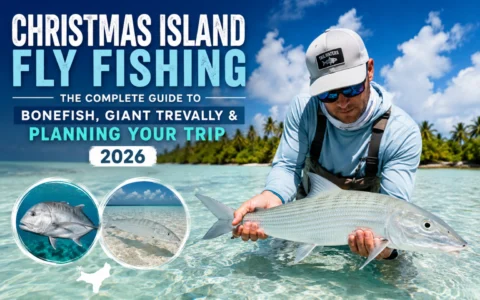
If you have spent any time around saltwater fly anglers, you already know the name. Christmas Island, or Kiritimati as it is called in Kiribati, comes up in almost every conversation about the best flats fishing on earth. It is the largest coral atoll in the world, sitting about 1,200 miles south of Honolulu and roughly 140 miles north of the equator, and it holds a fishery most saltwater anglers spend years trying to reach.
Christmas Island fly fishing is built around three things: miles of hard white sand flats, staggering numbers of bonefish, and a real shot at giant trevally on foot. Add in four species of triggerfish, three species of trevally, and offshore action for tuna, wahoo, and sailfish, and you have a fishery that rewards both first timers and anglers who have already fished everywhere else.
This guide covers what actually matters when you are planning this trip: the species you will target, when to go, how to get there, what it costs, and what to pack. If you are ready to book a guided week on the flats, our team at Fish-Nation can connect you with outfitters who know this fishery inside and out.
The Fishery: Bonefish, Giant Trevally, and Everything In Between
Christmas Island earned its reputation because of the sheer volume of fish available to a wading angler, not just the size of any single species. Most weeks on the flats produce more shots at fish than anglers can count, and that is exactly why this destination keeps pulling people back.
Bonefish: The Main Event
Bonefish are the backbone of the fishery, and they are found in numbers that are hard to find anywhere else. Fish in the 2 to 4 pound range are common, with plenty of chances at 5 to 10 pound fish over a week of fishing. It is not unusual for a single angler to land close to 100 bonefish over six days of guided fishing. Because the flats are hard sand and coral rather than mud, visibility is excellent, which makes this one of the best places in the world to learn sight casting or sharpen the skill if you already have it.
Local guides favor sparsely tied flies in small sizes, typically hooks in the 6 to 8 range. The Christmas Island Special in orange, pink, or pearl is the pattern nearly every guide will hand you first, along with Gotchas, Crazy Charlies, and small Mantis Shrimp patterns.
Giant Trevally: The Trophy Target
Giant trevally, known simply as GTs, are the reason a lot of serious saltwater anglers make this trip. These fish range from schooling juveniles in the teens of pounds up to genuine 80 to 100 pound giants that will test your gear, your knots, and your nerve. Because most GT fishing happens on foot in shallow water, hooking one is a completely different experience than fighting a GT from a boat in deeper water elsewhere in the Pacific.
GT flies tend to be larger baitfish and popper patterns in blue, gray, white, and tan. An 11 or 12 weight rod with a strong drag and heavy leader is standard, since these fish do not give you room for error once they eat.
Triggerfish, Other Trevally, and Offshore Options
Christmas Island also holds titan, yellow margin, Picasso, and peach face triggerfish, notoriously difficult to fool and even harder to land due to their crushing jaws. Golden and bluefin trevally round out the flats, and anglers wanting a change of pace can head offshore for yellowfin tuna, wahoo, and the occasional sailfish.
When to Fish Christmas Island
One of the best things about this fishery is that it produces year round. Air temperatures sit in the low to upper 80s Fahrenheit almost every day, and the lagoon rarely dips far outside that range either. That said, a few patterns are worth knowing before you book:
- Wind: January tends to be the windiest month, with conditions generally calming from March onward and picking back up around November.
- Moon and tides: Guides commonly target the days around the full moon for bonefish, since bigger schools tend to gather during those tides. For giant trevally, spring tides with larger swings push more water onto the flats and give GTs more room to hunt.
- Crowds: Winter months see the heaviest US traffic, so late spring and summer can mean quieter flats if you prefer more space.
None of these factors will make or break a trip on their own, but they are useful when you are choosing dates.
Planning Your Trip: Logistics, Costs, and Gear
Getting to Christmas Island takes more planning than a typical fishing trip, mostly because access is limited to a single weekly flight. Once you understand the routine, though, it is a straightforward process.
Getting There
Fiji Airways is currently the only carrier serving Cassidy International Airport (CXI), with one flight per week connecting Honolulu and Nadi, Fiji through Kiritimati. Anglers from North America typically fly into Honolulu, spend a night there, and catch the Tuesday flight, landing on Christmas Island Wednesday local time after crossing the International Date Line. Anglers from Australia or New Zealand connect through Nadi instead. Because there is only one flight in and out each week, travel insurance covering trip delays and medical evacuation is strongly recommended.
Fishing License and Costs
Every angler needs a fishing license, generally around $250 USD, payable in cash on arrival (some lodges now include this in their package rate, so confirm with your outfitter). Budget for a departure tax of roughly $20 as well. The island runs largely on cash, since there are no ATMs, so plan on bringing enough US dollars to cover tips, drinks, and incidentals for the week.
Lodge packages for a 7 night, 6 day guided week generally run in the range of $3,500 to $4,000 per person, not including international airfare. This typically covers lodging, meals, guided fishing, and ground transportation, though guide gratuities and hard alcohol are usually extra.
Gear to Pack
A typical Christmas Island kit includes:
- An 8 weight rod for bonefish and general flats work
- An 11 or 12 weight rod for giant trevally
- Floating lines matched to each rod, plus a sinking option for deeper water
- Sun protection, including a buff, polarized sunglasses, and reef-safe sunscreen
- Sturdy wading boots, since the coral and sand flats will chew through soft-soled shoes fast
- A well-stocked fly box covering the shrimp and crab patterns bonefish favor and the baitfish patterns GTs respond to
Most lodges do not supply rods or reels, so check with your outfitter ahead of time on exactly what is and is not provided.
Choosing a Lodge
Christmas Island has a handful of lodges, ranging from simple to more upscale. What matters most is guide quality and guide-to-angler ratio. A one-on-one guide setup means more eyes on the water and more shots at fish, a real difference on a fishery this good.
Planning a trip like this on your own is doable, but it takes time most working anglers do not have. Fish-Nation works with trusted Christmas Island outfitters and can match you to the right lodge, dates, and package for your goals and budget. Call +1 307-637-5495 or email info@fish-nation.com to start planning your week on the flats.
Frequently Asked Questions
How many bonefish can I expect to catch in a week on Christmas Island?
It varies by angler and conditions, but experienced anglers commonly land 50 to 100 bonefish over six days of guided fishing, thanks to the sheer numbers present on the flats.
Do I need to be an expert caster to fish Christmas Island?
No. The fishery is a great option for first time saltwater fly anglers because of the clear, shallow water and abundant bonefish. Giant trevally fishing rewards more experience, but guides will work with anglers at every skill level.
What is the best time of year to target giant trevally versus bonefish?
Fishing is productive year round, but many guides suggest spring tides around the full or new moon for GTs, since more water floods the flats, and neap tides for bonefish, since the fish tend to hold more consistently.
How difficult is it to get to Christmas Island?
Access is limited to a single weekly Fiji Airways flight connecting through Honolulu or Nadi, so trips require more advance planning than most fishing destinations. Once you are there, the fishing itself is very approachable.
Is Christmas Island fishing catch and release?
Yes, catch and release is standard practice for bonefish, giant trevally, and triggerfish across nearly all lodges and guide operations on the island, which is a major reason the fishery has stayed this productive for decades.
Ready to fish one of the best flats fisheries on the planet? Contact Fish-Nation at Call +1 307-637-5495 or email info@fish-nation.com and let us help you plan a Christmas Island trip built around your goals, group size, and budget.